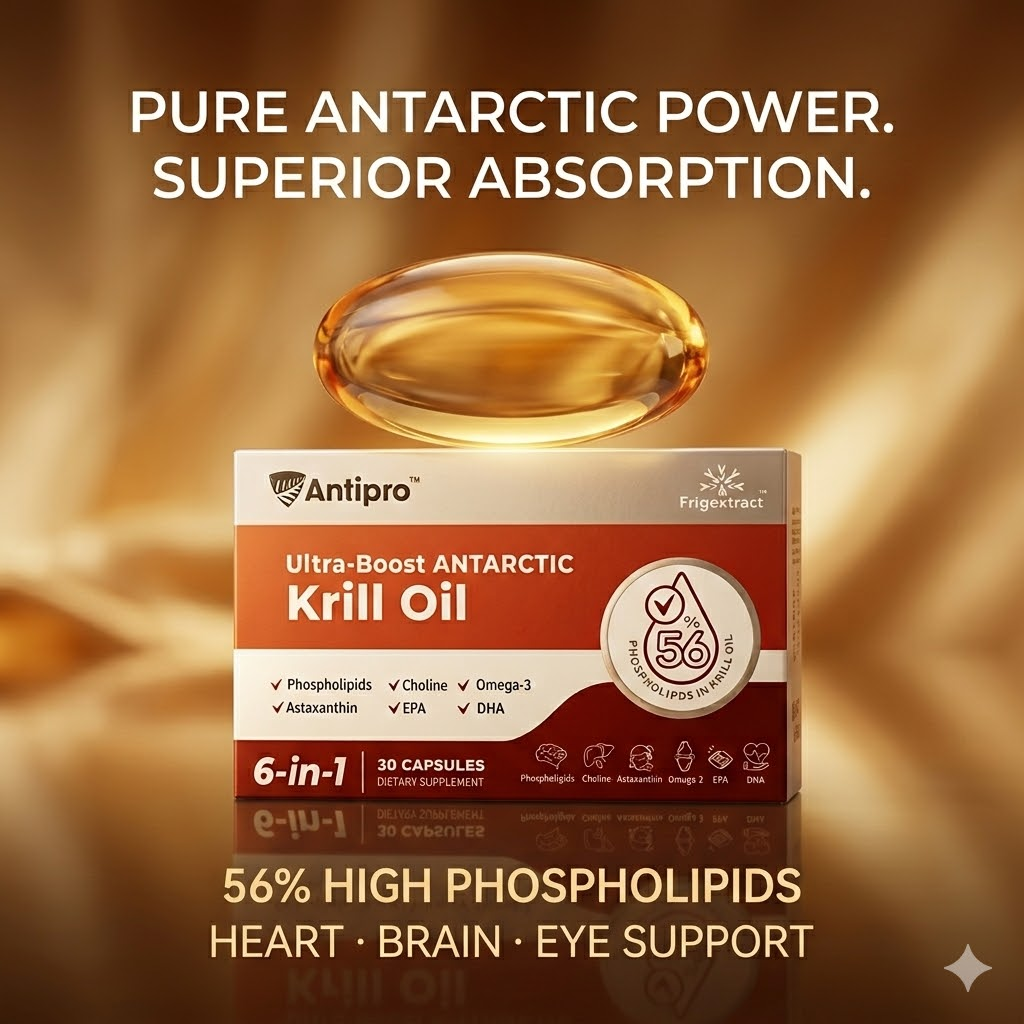
[Buy 3 Get 1 Free] Antipro Ultra-Boost Antarctic Krill Oil 6-in-1 30 Capsules | 56% Phospholipids + Astaxanthin
On Sale
20:07:03
Sales
NZ$27.99
57.60
Not a fan of fishy burps or big fish oil capsules? Try krill oil
Standard fish oil leaving you with fishy burps, or capsules too big to swallow comfortably? Every 2 capsules of Antipro Antarctic Krill Oil provide 1500mg krill oil, including 840mg phospholipids (56%), plus omega-3 405mg (EPA 240mg, DHA 112.5mg), choline 90mg and natural astaxanthin 150mcg — supporting heart, brain and eye health.
Choose this if
It suits adults who want omega-3 but are put off by the taste or size of fish oil, and anyone who wants phospholipids, choline and astaxanthin as well. Much of the omega-3 in krill oil is bound to phospholipids, rather than the triglyceride form in fish oil. Note that each 2-capsule serve provides about 350mg EPA+DHA — less than a high-concentrate fish oil — so if high-dose EPA/DHA is your main goal, a concentrated fish oil is a better fit. Contains crustacea (krill), so it is not for anyone allergic to shellfish.
At a glance
| Item | Details |
|---|---|
| Everyday goal | Supports heart, brain and eye health with omega-3 and phospholipids. |
| Key amounts | Per 2 capsules: Antarctic krill oil 1500mg, phospholipids 840mg (56%), omega-3 405mg. |
| 6-in-1 nutrients | Per 2 capsules: phospholipids, omega-3, EPA 240mg, DHA 112.5mg, choline 90mg, astaxanthin 150mcg. |
| Size & serve | 30 capsules; adults 1–2 capsules daily with food — about 15–30 days. |
| Before you use | Contains crustacea — not for shellfish allergy; check with your doctor if you take blood thinners. |
How is krill oil different from fish oil?
The omega-3 in fish oil is mainly in triglyceride form, while a large share of krill oil's omega-3 is bound to phospholipids — key building blocks of cell membranes, and one reason many people choose krill oil. Krill oil naturally contains astaxanthin, which gives the capsules their red colour, and this formula also provides choline, which contributes to normal metabolism and brain health. Made in New Zealand by Unipharm under GMP standards.
What's in each serve
Per 2 capsules: Antarctic krill oil 1500mg; phospholipids 840mg (56%); omega-3 fatty acids 405mg, including EPA 240mg and DHA 112.5mg; choline 90mg; natural astaxanthin 150mcg.
How to take it & how long it lasts
Adults take 1–2 capsules daily with food, or as directed by your healthcare professional. All amounts above are per 2 capsules — at 1 capsule a day, halve them. A 30-capsule pack lasts about 15 days at 2 a day, or 30 days at 1 a day.
Use & storage notes
NOT FOR USE: Contains crustacea (Antarctic krill). Do not take if you are allergic to shellfish such as prawns or crab, or to seafood.
If you take warfarin, aspirin or other anticoagulant or antiplatelet medicines, or are preparing for surgery, check with your doctor or pharmacist before use. Seek professional advice if pregnant, breastfeeding or managing a health condition. Supplements do not replace a balanced diet or medical treatment. Store below 25°C in a dry place away from direct sunlight. Do not use if the cap foil is broken or removed. Keep out of reach of children.
Customer questions
Q: Does krill oil have more omega-3 than fish oil?
A: Not necessarily. This provides 405mg omega-3 per 2 capsules (EPA 240mg + DHA 112.5mg), while a high-concentrate fish oil can deliver over 900mg EPA+DHA per capsule. Krill oil's strengths are its phospholipid form, astaxanthin and choline rather than total omega-3. If high-dose EPA/DHA is your priority, choose a concentrated fish oil.
Q: Should I take 1 or 2 capsules a day?
A: The label directs adults to take 1–2 capsules daily. The amounts on this page are per 2 capsules, so take 2 a day for the full 6-in-1 serve, or 1 a day for everyday maintenance. At 2 a day a pack lasts about 15 days.
Q: Can I take it with fish oil?
A: Krill oil and fish oil are both omega-3 supplements, so one is usually enough. If you take both, add up your total daily EPA+DHA, and check with your doctor or pharmacist first if you take blood-thinning medicines.
About this page: This page is prepared by BUYANZ based on the product label, brand information and common in-store customer needs in Auckland. It is for general nutrition reference only and is not a substitute for advice from a doctor or healthcare professional.